The platform
The BUD board, delivery forecasts, quality loops, living knowledge, XP and the People workspace. Everything your team works in, in one place.
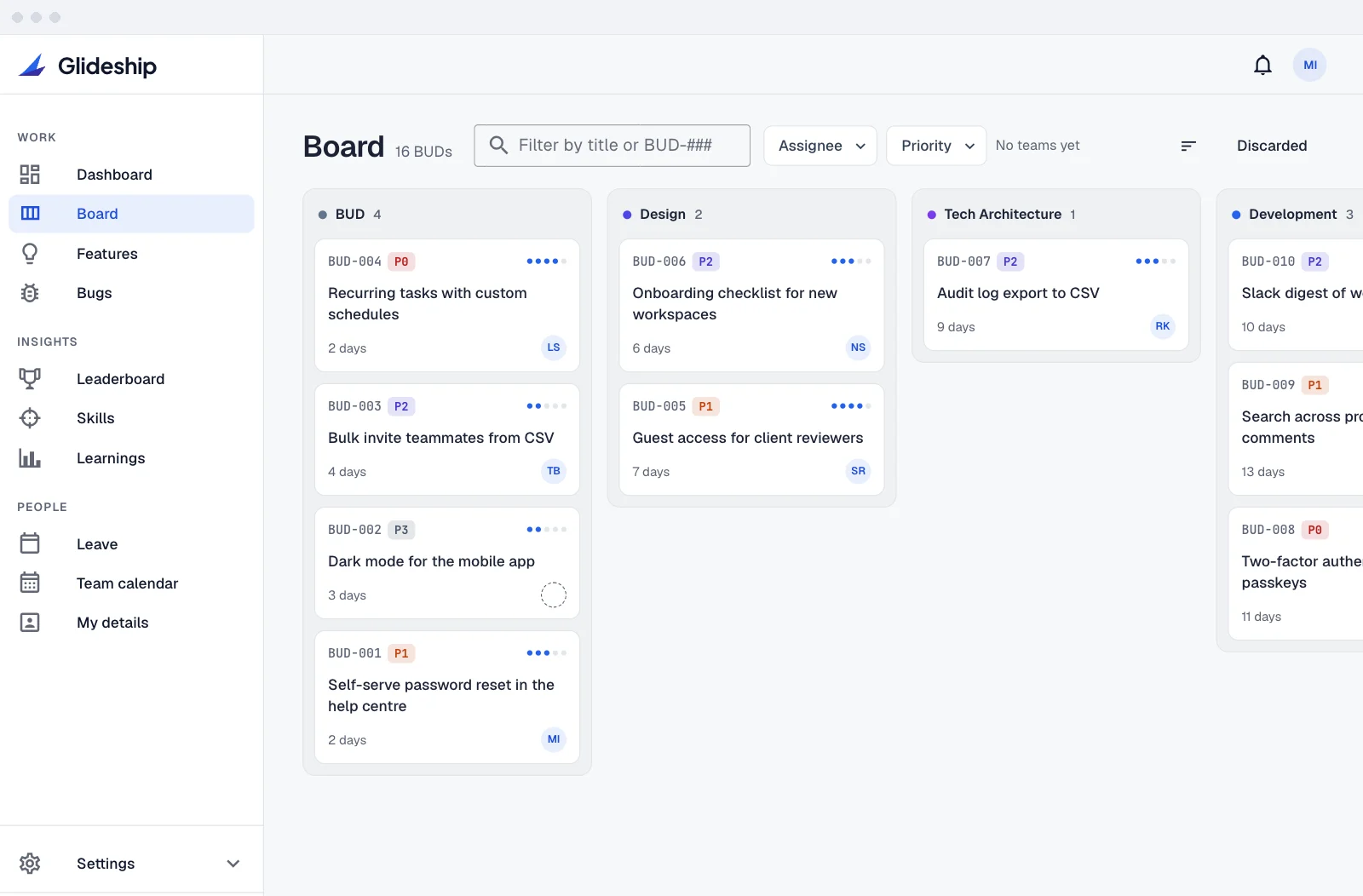
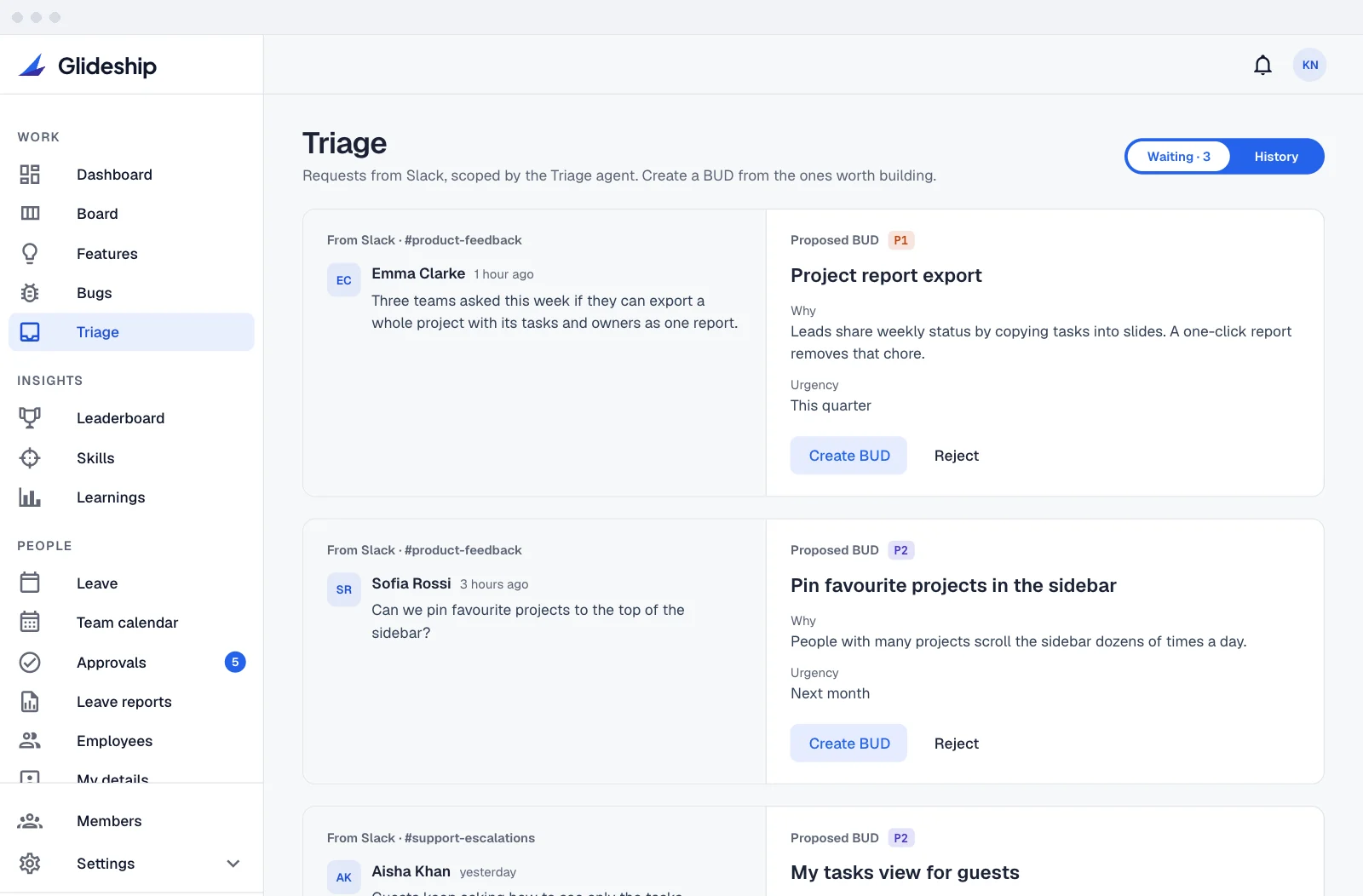
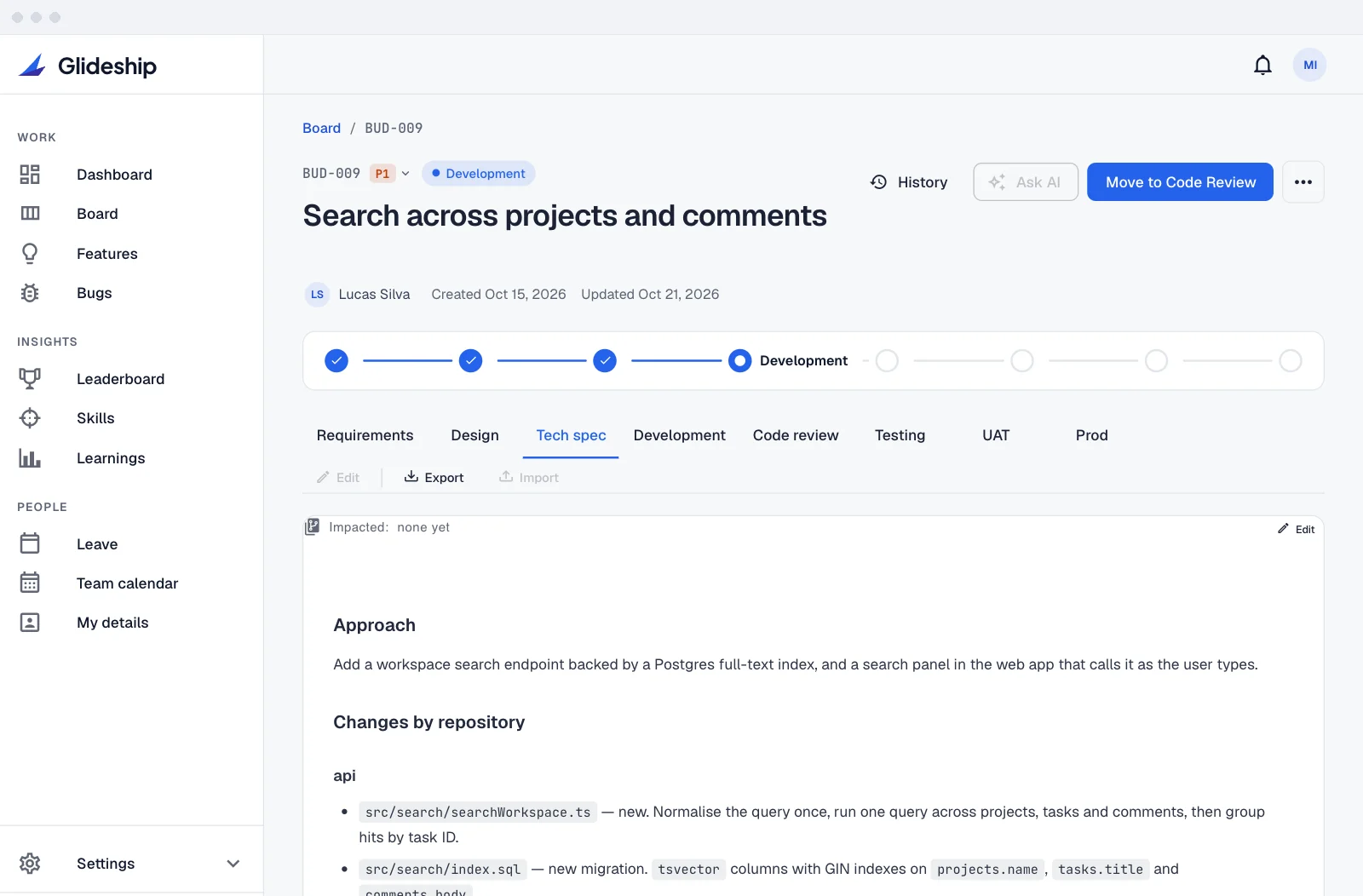
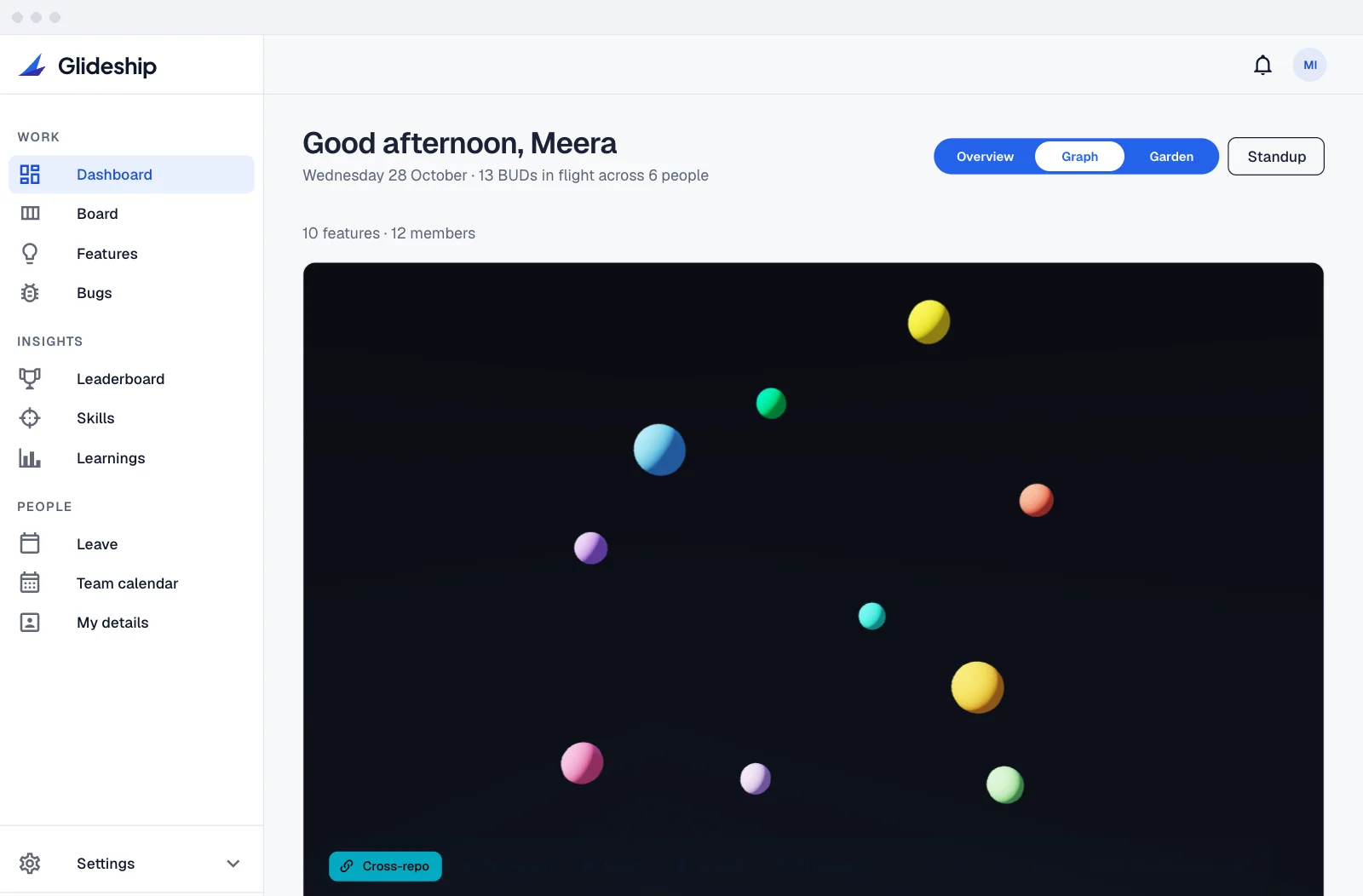
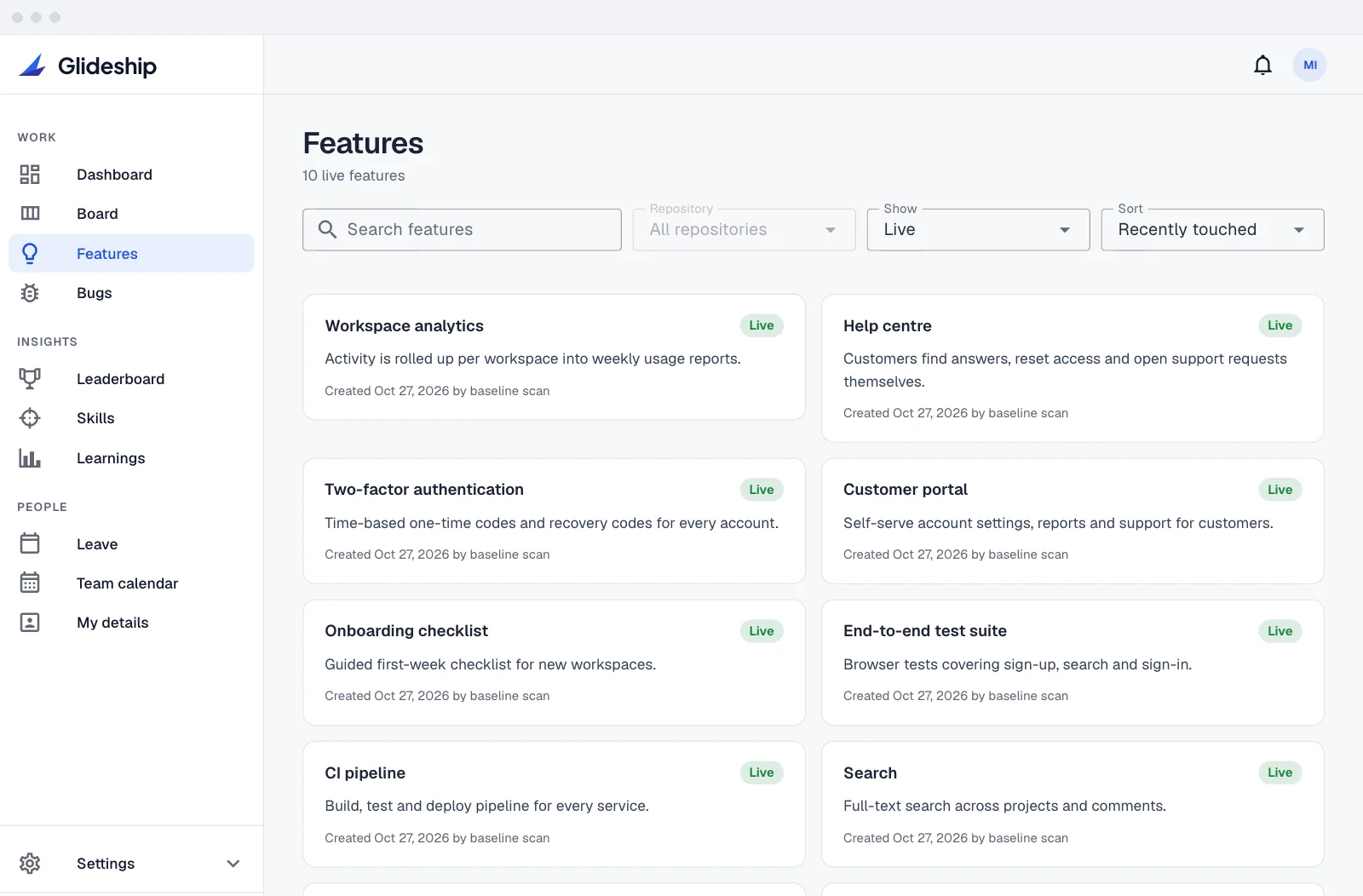
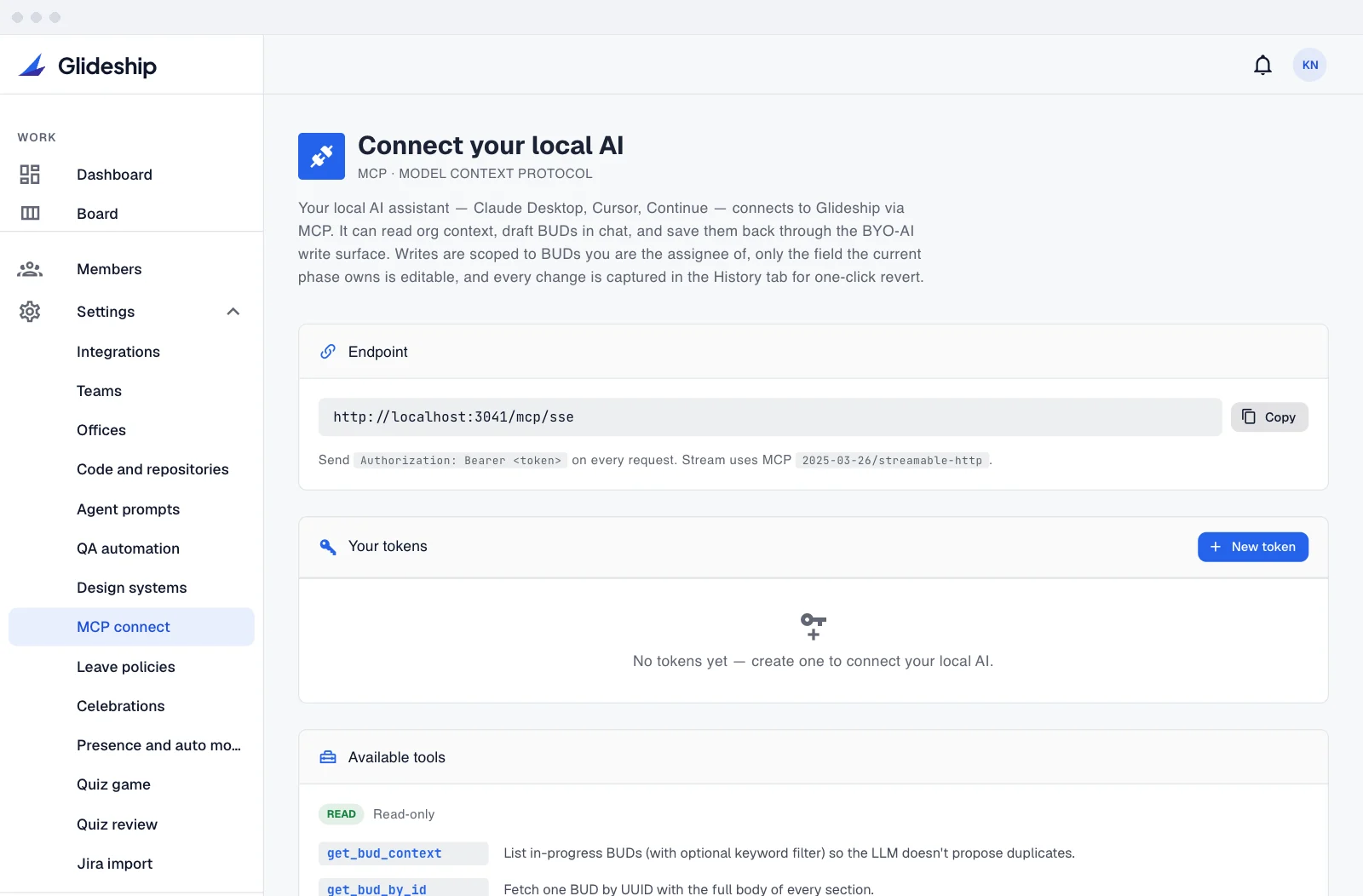
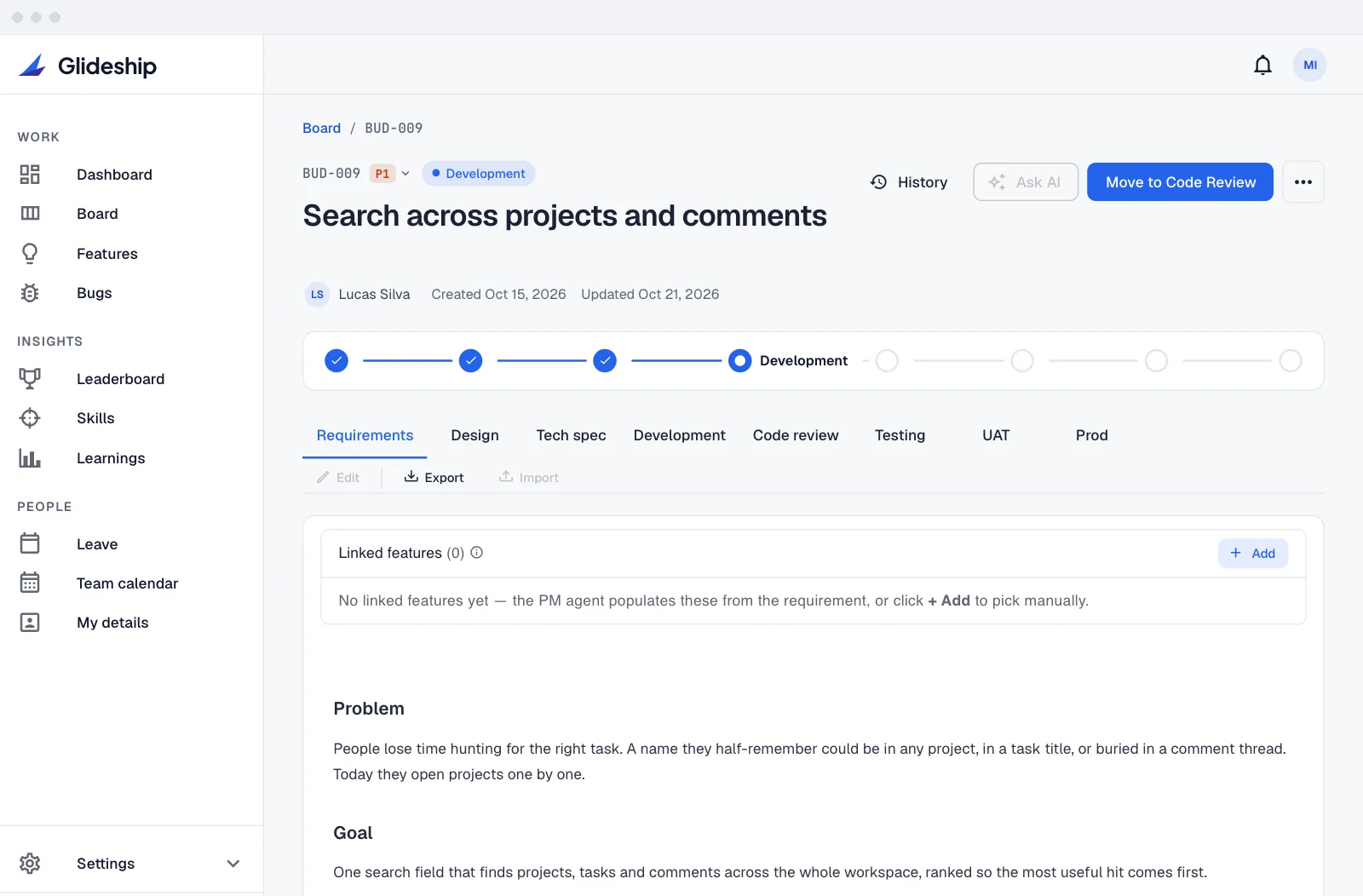
The BUD board. Every feature, from the first request to production.
The BUD holds the whole feature.
Every feature lives in one BUD, a Business Understanding Document. It holds the spec, tech spec, test plan, acceptance criteria and full history, and replaces scattered tickets, docs and wiki pages.
- Full history: stage changes, owners, reopens and bugs
- Searchable by meaning, so every agent can find it
Dates with odds, not points.
Story points and planning poker are gone. AI gives a best-case, likely and worst-case estimate for each phase (PERT). Then 10,000 Monte Carlo simulations turn those into dates that are 50%, 70% and 85% likely.
Each developer's skills, the backlog and current workload are taken into account. Forecasts get sharper as you ship, because the Learning Agent compares every estimate with what really happened.
Bugs go back where they came from.
Bugs are matched to the feature they came from and routed before they pile up. The backlog is ordered by data, not gut feeling.
Quality loops
- Bug Limit
Complexity × a multiplier you set for your organization. Go over it and the work is reassigned automatically.
- Auto-Reassignment
The original developer moves to bug review, and QA moves on to the next waiting BUD.
- Feature Reopening
Bugs from the outside world reopen the Feature and send it back through triage.
- Auto-Labelling
Each bug is labelled "missed feature" or "development bug", and each takes a different fix path.
- Knowledge Capture
Every bug fix goes into the knowledge base, so the same kind of bug is less likely to come back.
Backlog order
- Capacity-Aware Triage
The Triage Agent lowers the priority of new work, or holds it back, based on how much room the team has right now.
- Dynamic Reassignment
The Reassignment Agent moves work around as business needs shift.
- Customer Priority Scoring
Customer revenue (ARR), severity and customer tier set the backlog order automatically.
- Live Workload View
Tracks how busy each developer is, so work stays balanced.
Knowledge that keeps up with the code.
Four layers of knowledge replace the stale wiki. They stay in sync on their own, not on a timer, and every agent reads from them.
- Synced from the code, not kept up by hand
- Search by meaning, not just keywords
- Re-learned every time a pull request merges to your main branch
- Fed straight to the agents, so they always work from the latest
- 1Every merge to mainYour code
Source code plus a CLAUDE.md guide for each repo. Re-learned on every merge to your main branch.
- 2When they changeTeam standards
Coding standards, design guidelines and API patterns. Syncs when they change.
- 3Real timeDecisions
BUDs, your team's rules and architecture decisions. Updated in real time.
- 4AutomaticSearch by meaning
Find anything by what it means, not just the exact words. Indexed automatically.
of professional developers spend more than 30 minutes a day searching for answers or solutions to problems.
SourceStack Overflow Developer Survey 2024· 28,911 responses
Profiles that keep up.
The Skill Agent rebuilds developer profiles every day. No forms to fill in, no out-of-date CVs.
- Daily Profile Rebuilds
Reads git history, BUD work and bug fixes to score each skill from 0 to 1.0, module by module.
- Bus Factor Alerts
Flags modules that only one person has worked on, before that knowledge walks out the door.
- Assignment Suggestions
Suggests developers for new BUDs by matching skills with free time.
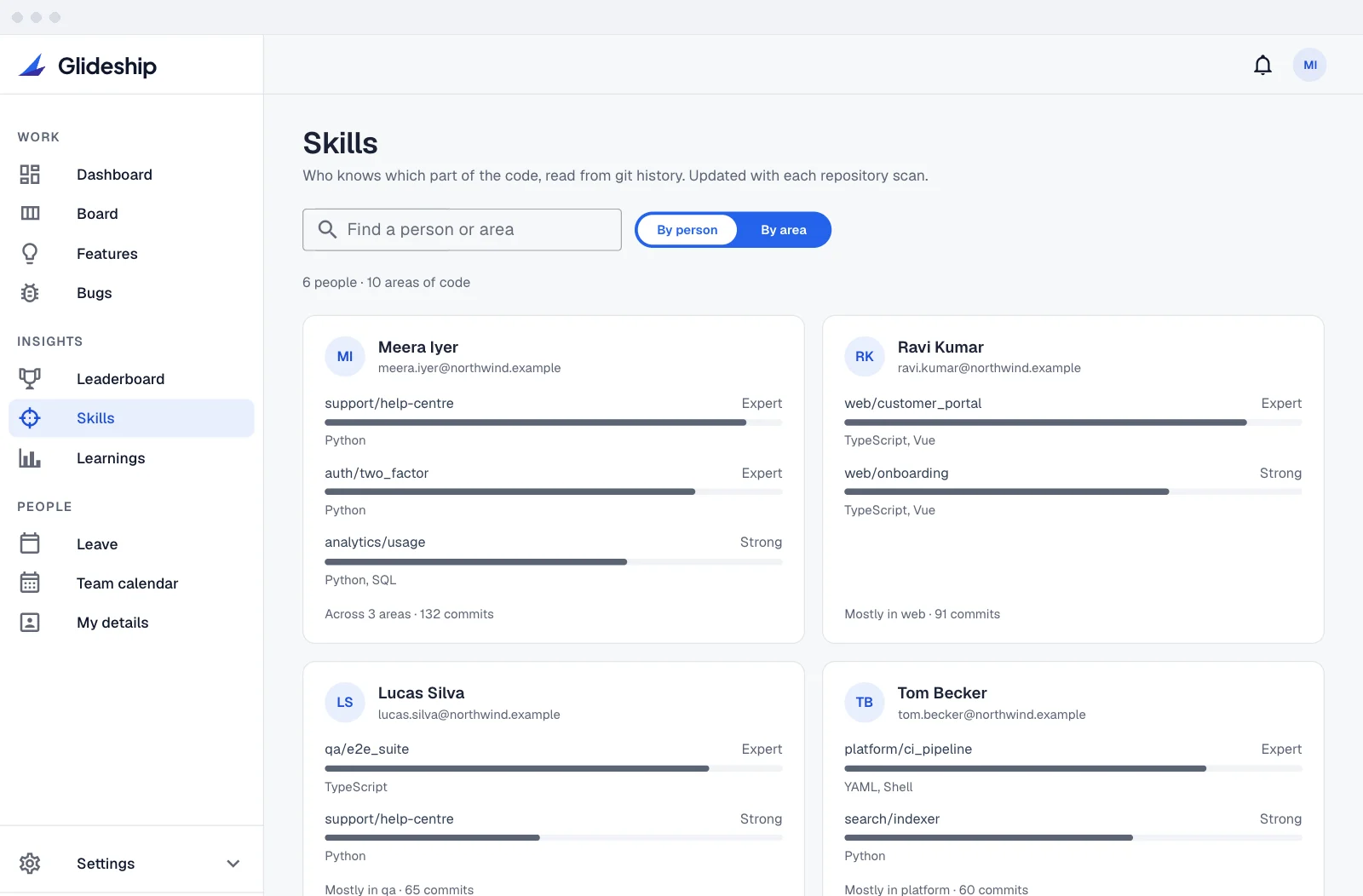
Levels, badges and a leaderboard.
Skills grow, badges unlock, and the leaderboard shows what people shipped, not how many tickets they touched.
Leave and records, in the same place.
The rest of the company works here too. Leave beyond someone's balance becomes unpaid leave instead of a refusal, any of their managers can approve it in Slack, and each office follows its own holiday calendar. Sensitive details such as IDs and documents are encrypted with a separate HR key, and every time someone views them, it is logged.
Watch it run.
Five short recordings, from setup to the retrospective. They were made before the rename, so you will see the old name in places.
From a Slack chat to a BUD. The Triage Agent drafts the spec, and Claude Code moves the BUD along through MCP tools.
Explore it for yourself
One command. Needs Docker and Node.js 18 or later. Your code and data stay on your machine. npx glideship init